
Avoiding brain mush when juggling coding agents
I start a coding session, and once it’s running independently, I’ll start another one, because suddenly not having a running session feels unproductive. A few sessions in, one needs an answer, another has changes to review, and I forgot where I left off with the third. That’s when the brain mush starts to set in. By the end of the week, I’m exhausted and drained.
Before I step away from a session, I check off the current action if done, and write down the very next thing I need to do as a follow-up. Think of these next actions as bookmarks for your mind. If I for instance have built a revision history panel and still need to test it on mobile, I might write “Open the History preview on my phone and try restoring an earlier draft.”
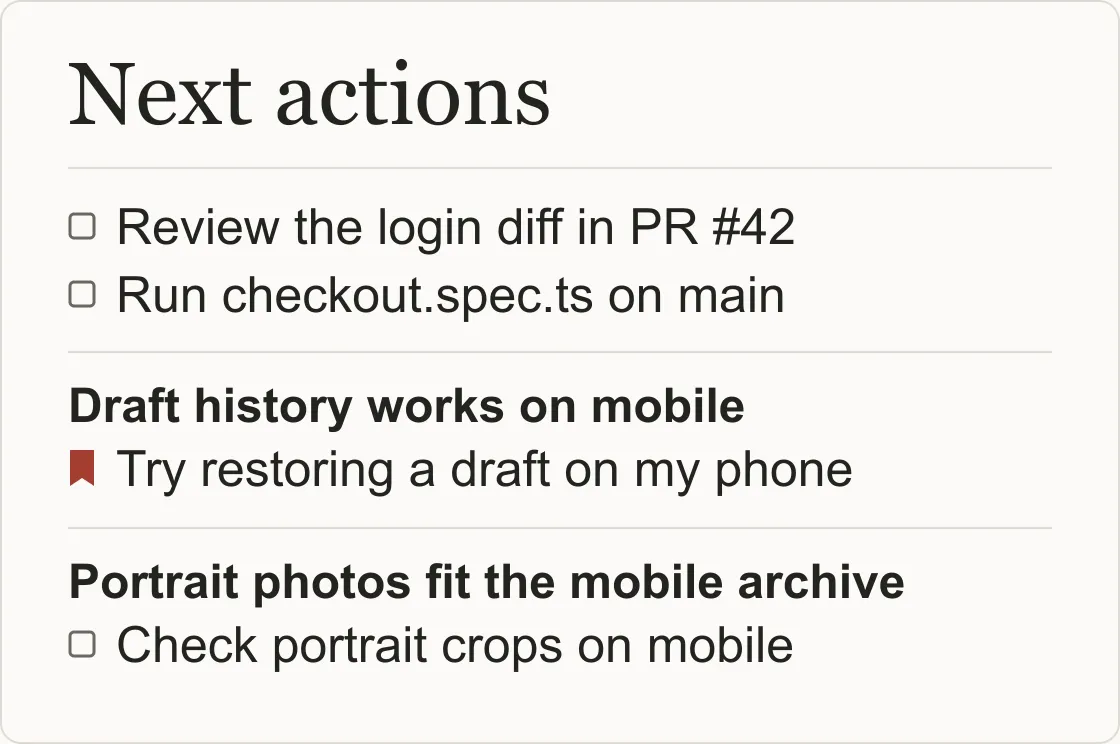
This process comes from GTD. The idea is to keep track of your commitments in a system you trust, and not keep them in your head. I use Things 3 because I’m in the Apple ecosystem, but a piece of paper works just as well. If you want to learn about the full workflow, I recommend reading David Allen’s Getting Things Done book.
A session usually starts with a next action from my list. If it starts with something that just popped into my head, I simply add it to the list. If I can finish it in one sitting, I check it off and move on. If it takes several sittings, I put the action in a project. Whenever I switch to something else or call it a day, I leave a new next action for that project.
When I return to a session, I can pick up right where I left off instead of rereading the conversation to figure out what I was doing.