
How to Focus
twitter.comHow to Focus is an article on how to focus on one thing at a time, and cutting down on distractions.
Via @raiha.
Things worth sharing, with a little context.
How to Focus is an article on how to focus on one thing at a time, and cutting down on distractions.
Via @raiha.
David Allen’s GTD Implementation Guide is a just-released PDF guide to help those who have read Getting Things Done to take it to the next level. There is a lot more detail to all steps of the process and how much time it is expected to take. It can be thought of as a part two of the book.
I am looking forward to reading this as soon as I get the time!
FogBugz 7.3 Now Available. Highlights include:
… and lots of smaller features and fixes. See the site for details.
Diaspora is going to be an open Facebook alternative. Things coming in the first sprint:
It will be very interesting to see what they will make of this.
Colin Wheeler writes about his journey about Going from Failing to Straight A’s with OmniFocus & GTD. It is very interesting to see GTD being used from a student’s perspective, instead of the working professional normally shown.
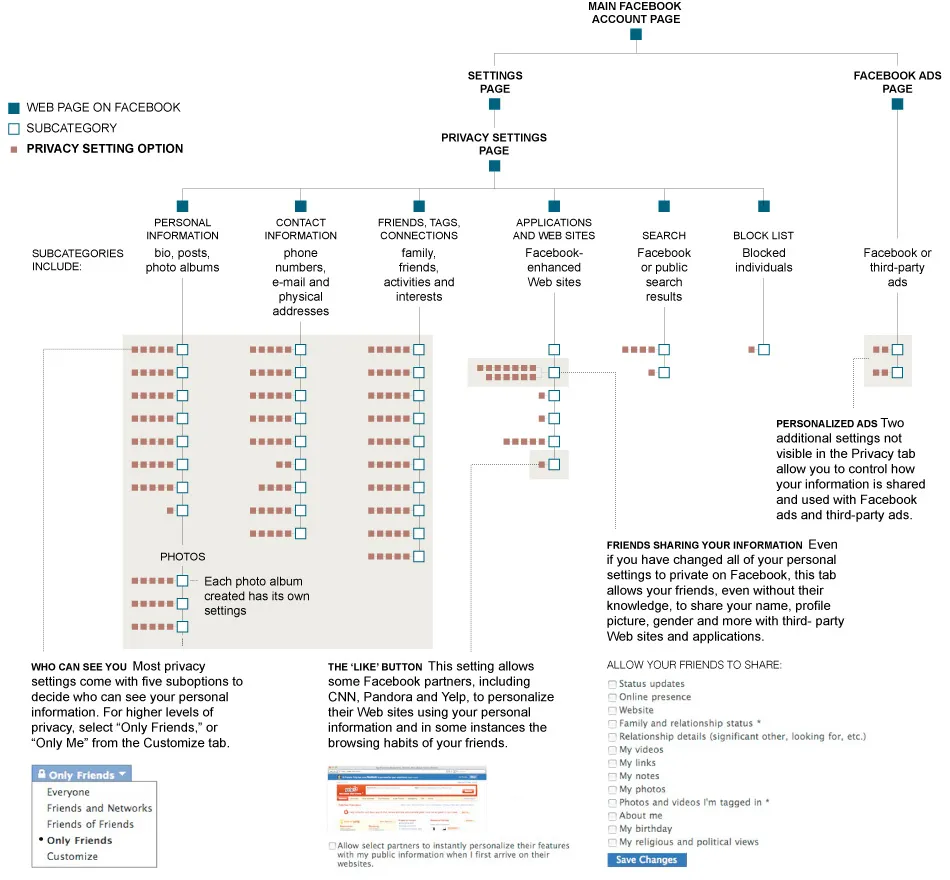
To manage your privacy on Facebook, you will need to navigate through 50 settings with more than 170 options. Facebook says it wants to offer precise controls for sharing on the Internet.

Jupiter has lost one of its prominent stripes, leaving its southern half looking unusually blank. Scientists are not sure what triggered the disappearance of the band.
This is an interesting article on how writing a book is in a way similar to software development.
There is something distinctive about how computer scientists write: we tend to use software development tools to “develop” our texts. This seems natural to us. A software program, after all, is just a big text, and the software developers are the authors of the text. If a tool is good for developing the large, complex, finicky text that is a program, why not use it for more traditional texts as well?
Unity, and Ubuntu Light is a post from Mark Shuttleworth, describing the future of Ubuntu as a netbook and light web browsing operating system.
A few months ago we took on the challenge of building a version of Ubuntu for the dual-boot, instant-on market. We wanted to be surfing the web in under 10 seconds, and give people a fantastic web experience. We also wanted it to be possible to upgrade from that limited usage model to a full desktop.
He continues to talk about touch being a target input for this OS, so making it easy to navigate, changing applications with the touch of a finger has added to the design decisions.
Habit Fields is an article from A List Apart, describing how different physical places assert certain behavior.
The more capable and multipurpose our tools become, the more the burden of deciding what they do shifts on us. Physical constraints must be replaced by artificial ones, and the effectiveness of our tools becomes an extension of our own willpower and self-discipline.
Just because you can have instant access at your fingertips doesn’t mean you should.
Finding your own trusted GTD system to feel at ease, even though you are forced to use certain tools at work. Chip Joyce shares his story on using Omnifocus together with Lotus Notes and getting everything working.
WordPress 3.0, Beta 2 has just been released. Changes in this beta include:
The Psychology of OmniFocus (How to Wrap your Head Around the Finest (and Most Perplexing) GTD App on the Market) is an excellent article by Ryan Norbauer, describing how he uses OmniFocus, the GTD pitfalls, and his core thinking:
The main point of OmniFocus is to hide things from you that you can’t possibly be doing right now while still letting you track them.
This is a good read if you have been curious about OmniFocus and haven’t dived in and tried it yet.
Ubuntu 10.04 LTS was just released with amazing new features and fixes including:
This is a LTS release, meaning that it will be supported until 2013 for desktops and 2015 for servers.
Preload the cache in WP Super Cache — the new version of the popular caching plugin for WordPress will support preloading the cache, which seems to increase the performance a lot, compared to the normal on-demand caching.
Spotify – the next generation talks about the just released update to Spotify with new social features like Facebook integration, integrated local tracks and music sharing. The following video gives a brief overview of the new features.
Massive Number of Godaddy WordPress Blogs Hacked This Weekend. “The best part is that the exploit only executes when the traffic is referred by Google, making it the sort of thing that site maintainers won’t easily notice. Clever and devious.”
How important are the tools you use with GTD? David Allen himself talks about GTD tools.