Links

Things worth sharing, with a little context.

Flickr Turns 10: The Photo-Sharing Site’s Rise, Fall and Revival

techland.time.com

It’s hard to imagine an internet without Flickr, but 10 years ago was the first time the service saw the day of light.

Earlier photo sites were mostly concerned with letting you put your pictures in front of friends and family. Flickr did that, too. But from the start, it was building a community of photo lovers around the world who wanted to share images with other photo lovers, as well as thousands of special interest sub-communities. It was about storytelling.

Through thick and thin, the community has always been one of Flickr’s primary strengths. There is an insane amount of groups catering to every nuance of photography to the intricate details of architecture and the joy of snapping that perfect family photo.

According to Spiering, today’s Flickr has more than 10 billion photos (vs. more than 250 billion on Facebook — but who ever said quantity trumps quality?). It hosts 1.8 million groups, which are being joined by 50,000 new members a day.

Stats like this really put things in perspective and it says something about the serious infrastructure and engineering that stands behind the site.

I have been a pro member for years and enjoy the automatic uploading of photos through the Flickr iOS app on a daily basis. Together with Flickring I can instantly access any photo I have ever taken with my iPhone and my regular camera. It is perfect as a replacement or in combination with iCloud.
Gust is Ghost for WordPress

wordpress.org

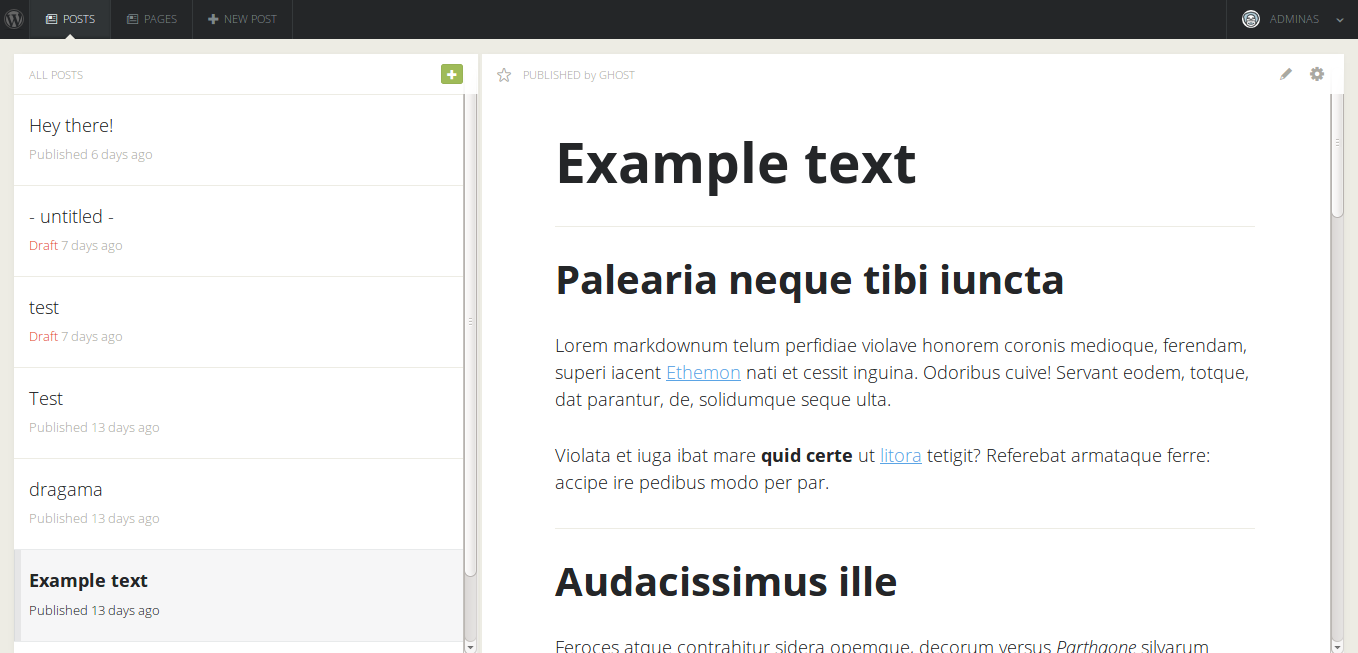
Ghost is a recently released blogging platform based on Node.js and probably a direct competitor to established platforms such as Medium.

screenshot-2

According to the author of Gust, Ghost was in its conception thought to be a WordPress plugin but morphed into an entity of its own, and this is where Gust comes in.

At the begining, Ghost was supposed to be a fork of WordPress. Then there was a talk of a plugin, that would give a next-generation admin panel for WordPress. But in the process it became a new blogging platform, built on Node.js. This plugin is an attempt to bring the nice and clean admin panel of Ghost back to the WordPress ecosystem.

I gave it a go in my test WordPress installation and I am really impressed by it, given its early stage in the development process. Just a couple of iterations more adding support for featured image, post format and custom fields, and I could probably use it.

screenshot-3

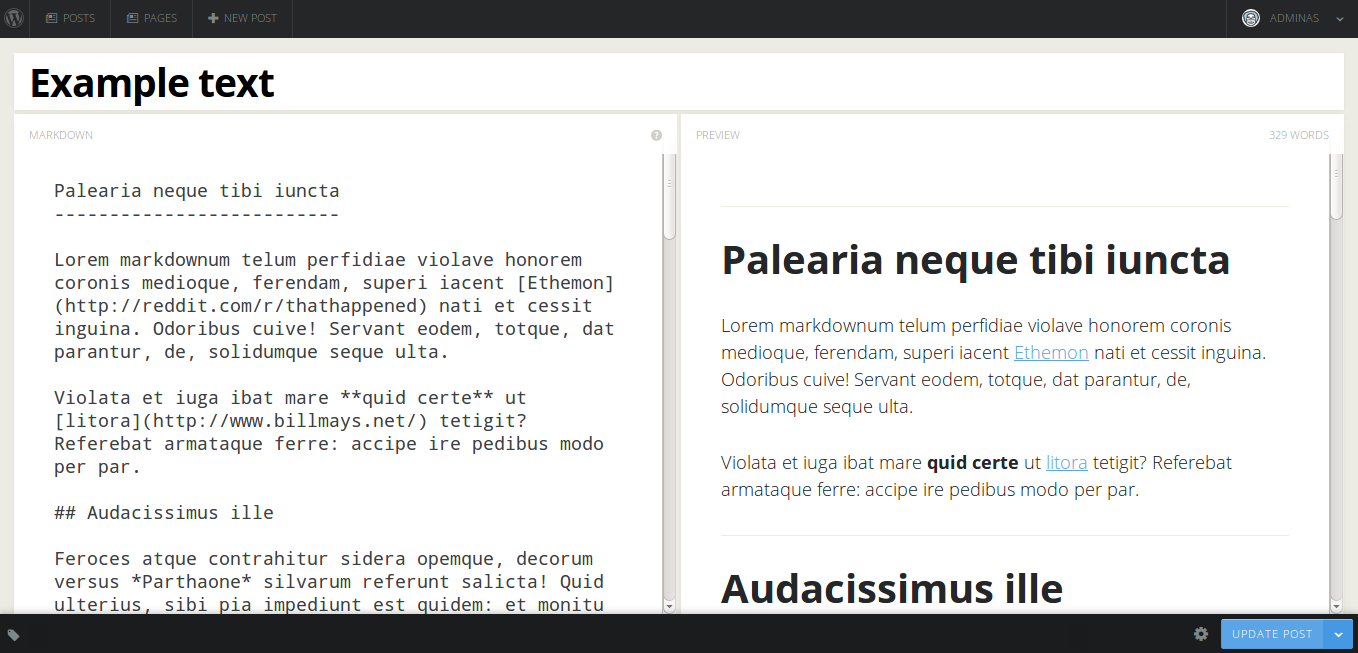
Its strengths lie in the realtime Markdown preview pane, which works really well. It currently doesn’t reflect the current website theme though, which may or may not be an issue.

Confessions of an ex-TSA Agent

politico.com

A story about the goings on behind the curtains of the TSA officers.

Most TSA officers I talked to told me they felt the agency’s day-to-day operations represented an abuse of public trust and funds.

Even though many were blindly taking orders, most people seem to in fact be normal thinking people.

Most of us knew the directives were questionable, but orders were orders. And in practice, officers with common sense were able to cut corners on the most absurd rules, provided supervisors or managers weren’t looking.

How I Lost My $50,000 Twitter Username

medium.com

This is some seriously scary stuff.

It’s hard to decide what’s more shocking, the fact that PayPal gave the attacker the last four digits of my credit card number over the phone, or that GoDaddy accepted it as verification.

Social engineering has been done since the beginning of time. Giving out credit card information, regardless of who is asking for it should just not be done. Since it has the powers to be used as a password substitute, it should be treated in the same manner.

Using two-factor authentication is a must. It’s probably what prevented the attacker from logging into my PayPal account. Though this situation illustrates that even two-factor authentication doesn’t help for everything.

There is no reason to not use two-factor authentication these days. Do however take note1 of all sites using two-factor auth connected to your phone , in case you need to change the phone number in the future2.


  1. I use a tag in 1Password for all sites requiring two-factor authentication. ↩

  2. This happened to me a while ago (a story for another day), which has lead me to always make it a conscious decision when entering my phone number on a website. I keep track of websites having my phone number using a tag in 1Password. ↩

How to use Gmail more efficiently using stars and multiple inboxes

klinger.io

Andreas Klinger describes an interesting approach to managing your Gmail inbox using a combination of the principles of Inbox Zero and GTD.

Without using any plugins, messages can easily be marked as having different statuses using custom stars while still having a good overview from the main Gmail view. The basic premise:

  • An easy to manage, usually empty inbox on the left
  • All “todos” in the first box
  • All emails “awaiting a reply” in the second
  • All “delegated” emails in the third
  • All emails related to meetings, flights, etc easy to find in the fourth
  • All done with 0 plugins, using only standard gmail features

There is just one thing keeping me from adopting this technique – I rarely use the normal Gmail interface, instead relying on apps such as Mailbox and AirMail. Not being able to use the entire workflow regardless of device will just make me not use it at all.

A lifesaver for me has been the OmniFocus Mail Drop service together with OmniFocus for keeping track of todos and waiting fors, but that is a post on its own.

Tesla Motors’ Over-the-Air Repairs Are the Way Forward

technologyreview.com

[…] because of its ability to send software updates to its vehicles wirelessly, the 29,222 Tesla Model S electric cars that were affected have already been fixed.

It seems that Tesla has become the Apple of the car industry by working together with the customers, making their lives easier instead of take the old proven path of having to hand in the car to get it updated.

I just can’t refrain from imagining what may happen if someone were to gain access to the Tesla software update process.

The Physics Behind Traffic Jams

smartmotorist.com

A really worth-while piece on the mechanics behind traffic jams and why they occur.

WHY must a bottleneck develop at a merge zone? Well, because everyone must take turns. Wrong! Under low-traffic conditions, everyone still takes turns, yet everyone merges at high speed. A bottleneck never appears. Traffic jams develop at a merge zone whenever the cars get so close together that there are no gaps between them.

Quite an interesting weekend read for anyone.

Using Considered tasks in OmniFocus

usingomnifocus.com

Since OmniFocus doesn’t have a muffle option for repeating tasks, ticking off undone tasks has become a necessity. Kourosh Dini has an elegant solution relying on the way you think about the tasks, and the keyword is “consider”.

Writing “Consider” before a task is very easy to do. It almost seems to be a gimmick or “cheat” potentially fraught with thorns of procrastination.

It does however keep the OmniFocus history more honest, even though you would still not know which ticked off actions were in fact really done.

MacRumors forums hack exposed password data for 860 000 users

arstechnica.com

It seems that MacRumors have joined Adobe, Sony and Ubuntu Forums in revealing a large number of user information, including MD5 password hashes.

One day passwords may be a thing of the past, but in the meantime use a password manager such as iCloud Keychain, 1Password, Lastpass to manage unique passwords for all sites.

Surfing the Mavericks

arstechnica.com

As you will indubitably have heard, Apple just released the next major version of their operating system. Having run out of cats to name the releases, they have now switched to Californian landmarks, and the first to be Applified is Mavericks.

If there is one review of Mac OS 10.9 you should read, it’s the one by John Siracusa for Ars Technica.

OS X 10.9 Mavericks: The Ars Technica Review

Using the Yesterbox technique to handle email overflow

yesterbox.com

Yesterbox seems to be an interesting approach for handling large amounts of email.

Instead of going though today’s email which fills up throughout the day and largely ignore the incoming stream of mayhem, focus on handling email from yesterday instead. That way, there is always a finished state, since no new email message can fill up the queue from yesterday.

There are of course times when you really need to reply to an email today, and the model supports this scenario as well. Just get going on the old email and as a “reward”, you may answer important email from today as well.

Enable Two-Step Verification in Evernote

blog.evernote.com

Evernote has now joined the growing number of online services with support for two-factor authentication.

What this means for the average user is a more secure account, as you will need to provide a second factor when logging in, such as an SMS from your phone, or a challenge/response using Google Authenticator.

An emotional take on contexts

medium.com

A slightly different take on contexts in GTD which, instead of compartmentalizing the current tools at you disposal, focuses on the emotional outcome of completing a particular action.

Ten principles for good design according to Dieter Rams

vitsoe.com

Back in the early 1980s, Dieter Rams was becoming increasingly concerned by the state of the world around him – “an impenetrable confusion of forms, colours and noises.” Aware that he was a significant contributor to that world, he asked himself an important question: is my design good design?

As good design cannot be measured in a finite way he set about expressing the ten most important principles for what he considered was good design.

Chromatic produces balanced photo galleries

crispymtn.com

Ever since we started working on Chromatic we knew we wanted the photos to be as big as possible. No tiny thumbnails, no square-cropping, no wasting of precious screen real estate.

Creating great looking photo galleries is always a challenge, but Johannes Treitz writes about an approach to make it happen. The end result is chromatic.io, a service where you can upload your photos and have beautiful looking galleries created for you.

Planning for the unknown

simplicitybliss.com

The author of Simplicitybliss writes about The Planning Fallacy and that we always underestimate the time when planning ahead.

Use a “Next Action” list instead of a daily todo list and work off it as much as you can while dealing with all the ad-hoc stuff showing up – this list represent commitments you need to get done, there is no obligation to complete all or any of them today

This is one of the main reasons I use GTD. Having the ability to take on ad-hoc work, knowing exactly what will be held back and what the consequences of taking on unplanned work can lead to.

What happens every second on the internet

onesecond.designly.com

Quite humbling to visualize what actually goes on right now on the internet. Every Instagram photo, Skype call and other common datasets are represented with an icon and the numbers are impressive.